What type of contract language could these companies rely upon to terminate the contracts?
When y'all streamline your contract management process, you can heave your revenue and abound your business. Learn the best means to get the full value out of every contract, no matter what business you're in.
Included on this folio, you'll notice a stride-by-footstep guide to the 10 steps of contract management, tips for improving your contract management process, details on how to create your ain contract management framework, and much more than.
What Is Contract Management?
Contracts govern your arrangement'southward relationships with vendors, customers, partners, and employees. Effective contract management ensures these relationships are efficient and profitable — that your business benefits from every agreement and you go optimal fiscal returns. Information technology as well ensures that the implementation or delivery of every contract, whether a legally binding written or oral agreement, is satisfactory to all parties.
Efficient contract management includes like-minded to, documenting, and reporting on any changes from both buyers and sellers, so you confront no disputes or surprises.
Don't let these productivity killers go unchecked.
See how Smartsheet can help you be more constructive
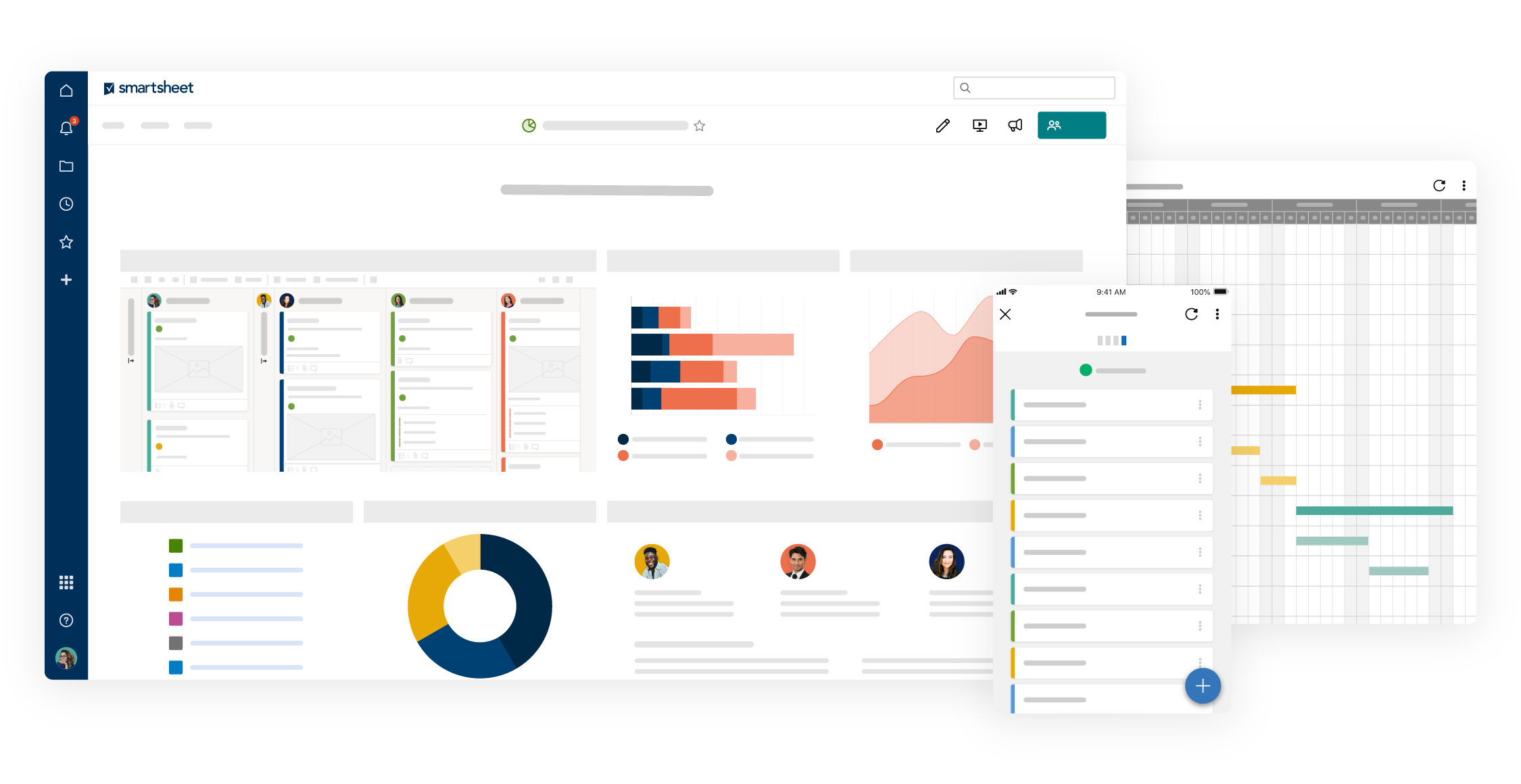
Picket the demo to see how you can more effectively manage your squad, projects, and processes with real-fourth dimension work management in Smartsheet.
Sentinel a complimentary demo
What Is Contract Life Cycle Management?
Contract life cycle management (CLM) covers every step of a contract, from drafting to approval, implementation, utilization, and expiration. CLM is vital to every business organization. The life bike has iii stages that encompass these actions: pre-laurels, award, and postal service-award. Each stride creates, contributes to, or uses contract data.
The best contract management processes use the data throughout the life bike to improve a company'due south exposure or power to manage financial or legal take a chance. CLM streamlines the process of managing all contracts that affect your business, from internal agreements with employees to external commitments with partners and vendors.
What Is the Contract Management Process?
Contract management touches every business and operations area of an organization. A consequent and efficient contract management process guides and streamlines the management of each contract through all its phases, from creation, negotiation on terms and conditions, and approving, through execution, performance, and compliance on deliverables and deadlines.
Contract direction handles any modifications to the contract, likewise as its termination. All phases should also ensure customer satisfaction.
What Is a Contract Management Framework?
The standards for contract management may be spelled out formally in a contract management framework (CMF), which tin can help guide your organization'southward process at a high level. The CMF has 4 main components that comprehend a range of activities.
-
Establishing Governance and the Contract Direction Squad: Identify the structure, roles, and responsibilities of the team, as well as the resources needed for contract management and whatsoever preparation.
-
Planning, Establishing, and Executing Contract Assistants: Plant and monitor the key components of contract administration in your organisation, including checklists, payment standards, and strategies for identifying and mitigating chance.
-
Managing Relationships: Bulldoze engagement by using communication tools and processes, every bit well as developing conflict-resolution protocols that build relationships with squad members, stakeholders, and partners.
-
Managing Performance: Assess whether the contract'south deliverables meet the standards spelled out in the contract, and use operation improvement methods to address substandard work.
The telescopic of contract management covers strategy, sales, performance optimization, and your relationships with customers and suppliers. The National Contract Management Association (NCMA) defines contract management as "the process of managing contracts, deliverables, deadlines, and contract terms and conditions while ensuring customer satisfaction." Information technology involves many areas of the organization to ensure that y'all not only meet your operational, functional, and business organisation objectives, but that you profit from every interaction and evangelize cost-effective approaches.
The International Association for Contract & Commercial Management puts it this way: Contract direction is "a disquisitional vehicle for high-value management data that supports strategic decision making."
Contract Management Framework
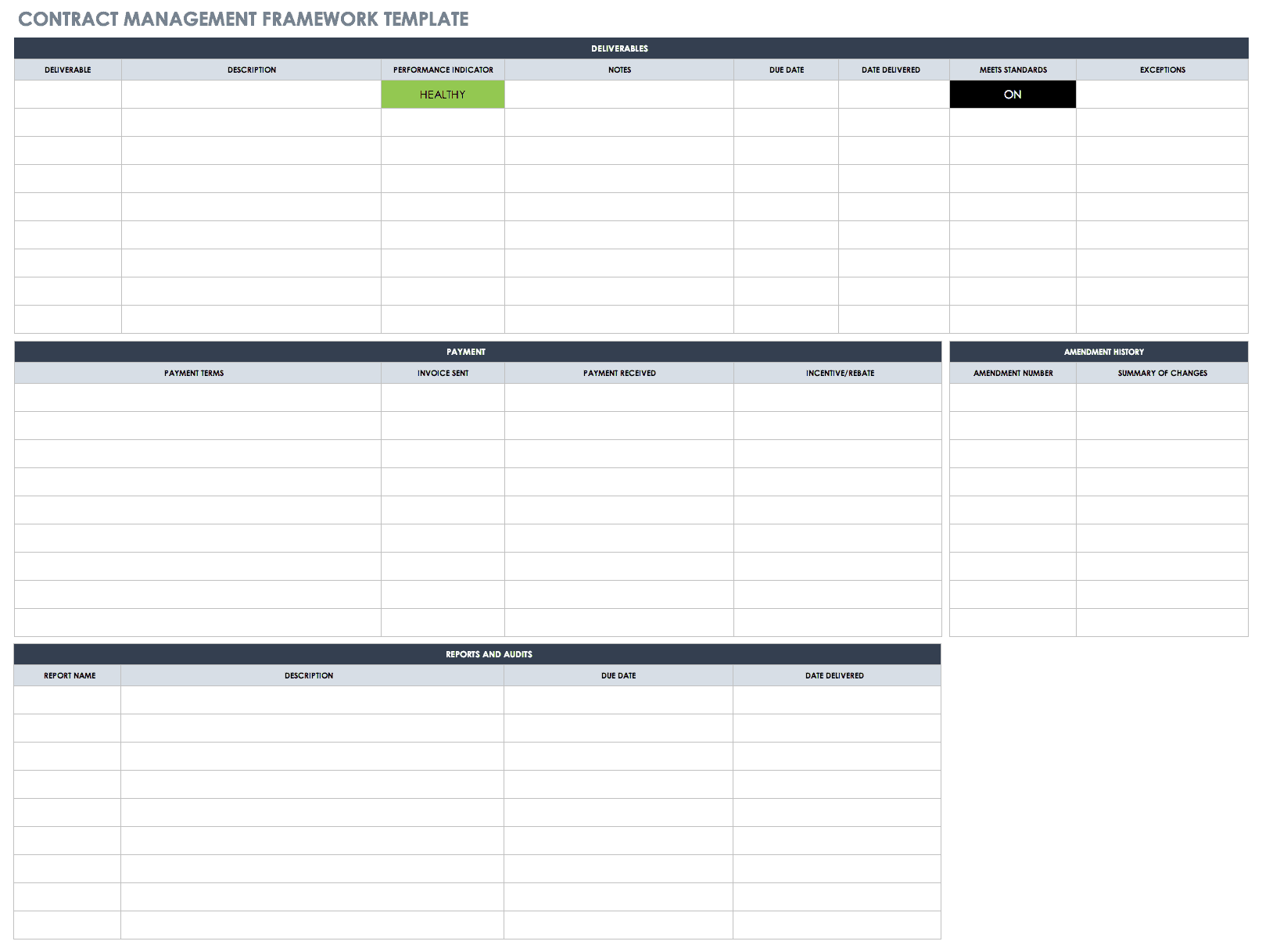
The contract management framework is unique to your system. Place the fundamental information and deliverables for every contract y'all manage.
Download Contract Management Framework Template
Excel | Smartsheet
What Exercise Contract Management Professionals Do?
Contract managers play a vital role in ensuring companies get the full value from every contract. Their responsibilities include the following:
- Write proposals, analyze information, and respond to partners.
- Negotiate cost, timeline, terms, and weather.
- Manage the contract, ensure compliance and implementation, solve problems, and resolve conflicts.
- Prepare the time and responsibility schedule, likewise as manage the team to fulfill the contract process.
The Contract Management Body of Knowledge (CMBOK)®, fifth edition, based on NCMA'due south Contract Management Standard™, outlines the competencies for contract managers as the following:
- Leadership Competencies: These include collaboration and vision.
- Management Competencies: These include business assistants, financial management, project management, and risk management.
- Guiding Principles: These include skills and roles, contract principles, standards of deport, and regulatory compliance.
- Pre-Award Competencies: These include acquisition planning, requesting offers, and business development.
- Award Competencies: These include price or cost analysis, negotiations, and source selection.
- Mail service-Award Competencies: These include contract assistants, quality assurance, subcontract management, contract changes and modifications, and contract closeout.
- Learning Competencies: These include continuous learning, individual competence, and organizational capability.
What Is the Importance of Contract Management?
Contract management affects your system'south revenue, upkeep, and operations. It too influences the way your customers view you, also as your public image. The way you manage your contracts tin touch upon almost every attribute of your company. Contracts are crucial to the success of any concern arrangement.
Here are some means that adept contract management tin can bear upon your business concern and your lesser line:
- Improves the procedure for generating, negotiating, signing, and renewing contracts
- Increases acquirement (and reduces expenses) because you tin can streamline contract creation and implementation processes
- Creates potent relationships with your partners and vendors considering you monitor contract performance and quickly identify problem areas
- Promotes long-term profitability because you tin renew more contracts with the partners who provide the best business opportunities
- Ensures your suppliers are cooperative and respond to your system's needs
- Supports strategic decision making because you can hands meet the areas for growth, the partners and vendors that provide the best opportunities, and your arrangement's power to commit to additional work
- Converts your strategy, partnerships, practices, policies, and capabilities into specific terms and conditions for whatever contract, providing deep insight into your business organisation
- Through a contract director, advises C-suite stakeholders and executives on the effectiveness of the contract in implementing the organization'southward goals
- Supports commercial management because it ensures that you lot run into all your legal commitments once y'all've entered into a contract
- Helps you assess, monitor, and mitigate financial, legal, and procurement risks
- Creates standard processes for routine contracts and business, freeing time to address new business prospects and unique or infrequent processes or implementations
Contract Direction Powers the Sales Cycle
Optimized contract management — the power to tap the data in your contracts — benefits your sales cycle and is a growth surface area for all businesses. Y'all tin can shorten this cycle from sales atomic number 82 to contract to acquirement, besides equally reduce your customer acquisition costs, when you have upwardly-to-date data and templates. Here are some means contract management improves your sales cycle:
- Contract data helps yous create quotes based on previous contracts.
- Contract data cuts down on the negotiation procedure when initial quotes reflect the customer's needs and previous business organisation dealings.
- Templates provide quality contracts that require less review from legal.
- Effective contract implementation increases the likelihood of return business because customers are satisfied.
What Are the Stages of Contract Management?
Contract direction and administration cover all stages of a contract, from creation and implementation to analysis, in a way that helps your organisation amend its functioning, boost sales, and increase revenue. It supports the complete customer and sales cycle, too as the contract life cycle.
Contract Management Process Map
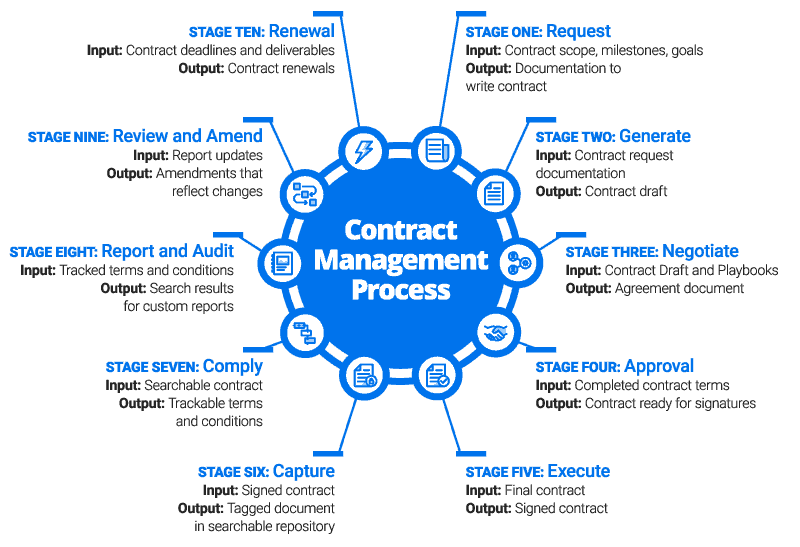
This contract management procedure map walks you through the 10 steps of the management process. Use it to identify the key inputs, deliverables, and outputs for each stride in the contract direction process.
Contract Direction Stage one: Request
Favorable discussions or quotes with a potential business partner or vendor trigger the request for a legal contract. In this pre-award phase, focus on the reasons for the contract and whether both sides can fulfill the terms.
At this stage, brand sure that senior management supports the request and the partnership or agreement. Doing this will go along you from running into roadblocks afterwards in the process or killing the projection considering it didn't align with direction'due south goals and strategy.
Here'southward a list of tasks yous should complete in the first phase of contract training:
- Identify the needs of the partner or vendor.
- Empathize the groundwork of the contract and the business relationship.
- Establish the goals of the proposed projection, deal, or transaction.
- Place and set expectations.
- Place, ascertain, and outline the terms to mitigate risk.
- Specify the actions both parties need to take in lodge to fulfill the agreement.
- Identify the key documents and contacts that will support the contract. (Typically, this data is accessible through an online, searchable library past way of an automated process.)
The inputs at this phase are the goals of the project, the information nearly the activities that support the contract, and the critical dates. The output is the initial documentation that saves the data and provides an early on audit trail.
Contract Management Phase 2: Generate
To create an initial draft of the contract, research the purpose of the project and be clear about its goals. You may need to assemble documents during the quote process or early sales cycle to ensure yous take the context you demand to generate the contract. Contracts typically change during negotiations, so both parties demand to be flexible with the draft. Here are best practices for the draft:
- The draft should be based on the contract request information.
- The typhoon should include all related documents needed to fulfill the contract, such every bit clauses, terms, and weather condition.
- The typhoon should use clear and specific wording to avoid ambiguity or misunderstanding.
Templates with canonical language from legal will speed up this stage and aid you avoid bottlenecks that tin occur when legal has to go involved in drafting every contract. Many automated contract management systems comprise a searchable database of approved templates, clauses, and other legal documents.
Contract Direction Stage 3: Negotiate
Negotiations should brainstorm with trust and transparency to ensure that both parties have the best possible agreement. In many cases, negotiators utilize playbooks that break downwardly the contract's terms, fallback positions, clauses, effect lists, and questions that both parties demand to answer during negotiations. Here are the steps in the negotiation stage:
- Circulate the draft amid internal stakeholders to ensure yous've addressed all questions and problems.
- Circulate the draft among the partner or vendor's main contacts to gather feedback and place points of discussion.
- Review feedback on the draft, comparison versions and identifying the discrepancies that crave negotiation.
- Negotiate the terms and conditions, determining what is acceptable to both parties.
- Circulate suggested revisions until both parties reach a terminal agreement on the terms and conditions.
- Document every change to the contract. (Y'all can compress the review time of these changes by using tracking features in software.)
- Finalize the changes, usually through a term sail or letter of understanding (LOU) to make certain everyone approves of the terms and conditions before signing the last contract.
- Identify the people who have the authority to formally approve and sign the final contract, as well as other signing details.
When yous're done, you volition have a terminal contract or agreement document that is prepare for formal approval.
Contract Management Stage iv: Approve
Once everyone has agreed to the terms of the contract, yous can become concluding approvals. Depending on the contract's size and scope, yous may need to include your legal section, key executives and other internal direction, external stakeholders, and the client. The input is the contract document; the output is the last contract approval.
Yous may encounter another clogging when seeking management approving. To avoid that potential obstacle, make sure you've identified who needs to review the contract, and have policies and procedures to confirm the blessing process.
Whether you use a transmission workflow for approvals or an automated system that routes the contract and sends alerts, you lot must still oversee the procedure, then the contract can be completed and yous can close the transaction. You can use parallel approvals (gathered by diverse departments at the same time) or series approvals (sign-offs that happen in a consecutive workflow) to keep the procedure moving forward.
In this detail-driven stage of the process, approval tasks and checklists help you prepare for the transaction'southward closing. Keep records of all the pre-closing, coming together, memoranda, and approval workflows. This documentation also helps yous later, during your compliance and inspect trails.
Contract Management Stage 5: Execute
To finalize the deal, all parties need to sign the approved contract. The contract goes into outcome with those signatures. At this point, everyone should understand how the contract volition work. You tin simplify the signature process with e-signatures, especially if y'all are working with parties in different time zones or on dissimilar continents. Side by side, give copies of the signed agreement to all parties and store them in filing cabinets or in an online server or document library (where you can search for and manage them).
Contract Management Stage 6: Capture
Not only the source of truth for everyone involved in the project, each contract also contains a storehouse of information that you tin can use to abound your business. Assemble all the signed contracts and supporting endmost documents in a central organisation, so you lot can search, rails, and recall the data. By organizing your documents this manner, you lot can reap the following benefits:
- It'southward like shooting fish in a barrel to admission for tape direction, contract visibility, quality assurance and awareness, and complex situations.
- It tags them with relevant keywords for like shooting fish in a barrel search results and document retrieval.
- Information technology structures them for machine-readable or robotic discovery of data, which may include optical character recognition (OCR) conversion of PDFs or JPEGs into text documents that you can search using motorcar learning or bogus intelligence (AI).
- Information technology stores them securely to protect against theft or cyber set on.
Contract Direction Stage vii: Comply
Once everyone has signed the contract, all parties need to adhere to the agreement'southward terms and weather. Failure to meet any performance measures, payment, or reporting can put you in breach of contract and may result in liabilities or contract termination. If you don't comply with regulations, y'all tin face up astringent penalties and even damage your system's brand.
Throughout the contract life cycle, you need to ensure y'all are following the contract'due south aims and sections (also known as obligation management or commitment management), and exist on the lookout for whatsoever signs of noncompliance, including quality bug. One way to track and enforce compliance is by ensuring that a records management system is safely storing, accessing, and updating all your disquisitional documents.
Contract Management Phase 8: Study and Audit
Reports and audits help you monitor the progress of a contract and warning you to potential problems and compliance issues. The contract should spell out the scope of whatsoever report or audit, but this can be tricky to monitor if the contract itself is stuck in a filing cabinet or desk drawer. With digital files and cloud storage in a searchable database or contract repository, information technology can be easier for you to know what you need to rail and when you lot need to deliver the information.
Once yous've established the best manner to quickly and efficiently find the data, consider using an audit or report checklist that includes these details:
- Payment, billing, and invoicing
- Project expenses and spending
- Project milestones and deliverables
- Quality testing
- Client service
- Systems and documentation used for audit trails
Reports and audits can reveal deficiencies or conditions that put the contract at chance, and you can put strategies in place to eliminate, mitigate, or transfer any potential run a risk.
Contract Direction Stage ix: Review and Amend
Use the data in your reports to review your progress and identify whether you need to make changes to the contract. Found a plan and fourth dimension frame to review the performance of the contract. Revisions, changes, and amendments are common in the contract life cycle. Here is a list of typical changes:
- Cost or toll
- Scope of work
- Deliverables
- Schedule or timeline
- Overlooked items
A contract manager uses their skills in change management and document direction to identify these areas, manage the relationship betwixt the parties, and capture the details of the changes to which both parties agree. Some trouble areas may exist too severe to solve with a contract subpoena. In those cases, contract termination may be the best solution for poor vendor performance or other issues.
Contract Management Phase 10: Renew
At the end of the agreement, you have the opportunity to consider extending the concern relationship and renewing the contract. Brand sure you've gear up alerts before the contract expires, and so yous tin consider your pick to permit the contract lapse and finish the human relationship, renew the agreement, or renegotiate and create a new contract. You lot can rely on the operation reports to place the best business — and revenue — opportunities, which feed back into the sales wheel.
Contract Management Maturity
The information in your contracts tin can help you grow your business. With ameliorate insight into the terms and performance of your contracts, you tin lower your take a chance outcomes, improve your sales and renewal performance, and optimize your contract portfolio. The contract management maturity model (CMMM) provides a framework to help you lot move from a tactical business organisation operation to a strategic approach that enhances your arrangement'southward goals and revenue.
Here are the five stages of the CMMM. Every bit your arrangement moves from an ad hoc to an optimized approach, you will identify more than opportunities for business growth and strategic alignment between your contracts and your visitor's long-term goals.
- Advert Hoc: Organizations in this phase have some established processes, but the processes are non followed company-wide. These organizations lack a formal documentation system, and managers are not held accountable to comply with contract management policies and procedures.
- Basic: These organizations have basic standards and processes, but these processes are required just for complicated, disquisitional, or high-value contracts. They are not used on all contracts.
- Structured: At this level, organizations have company-broad contract management standards and processes with formal documentation. With a library of standard contracts, managers tailor individual contracts rather than starting from scratch with each new contract. In addition, senior management offers direction and guidance.
- Integrated: At this level, the contract management process is fully integrated with other business organization functions, such as financial management and systems technology. The contract team includes cease-user customers, and management uses metrics to make decisions nearly contracts and evaluate parts of the contract management process.
- Optimized: At the highest level of maturity, organizations use functioning information to evaluate the efficiency, effectiveness, and quality of the contract direction procedure. These organizations besides take a continuous improvement approach to the process, applying lessons learned and all-time practices with new and renewed contracts.
Uses of Contract Direction
The process of managing contracts covers nearly every manufacture, authorities agency, commercial business, academic institution, and more than. All kinds of businesses, from public agencies to individual companies, rely on a range of contracts that require contract management. Hither are some examples of agreements that require contract management:
- Commercial Contracts
- Employment letters
- Purchase contracts and orders
- Sales contracts and invoices
- Utility contracts
- Complex Agreements
- Structure projects
- Highly regulated or technical goods or services
- Intellectual property
- International trade
- External Parties
- Clients
- Distributors
- Freelancers
- Suppliers
- Partnership agreements
- Vendors
- Internal Parties
- Contracting
- Employees
- Legal
- Sales and finance
Contract Direction in Procurement
Procurement relies on contracts to purchase the supplies and services your business needs. Sound contract management improves your procurement cycle and management. Here are the almost common types of procurement contracts:
- Price-Reimbursable or Cost-Plus Contracts: When you haven't fully divers the scope of work, use this agreement to pay the vendor or service provider for expenses related to developing the goods or services.
- Fixed-Price Contracts: This is an agreement to provide goods or services at a set cost and commitment schedule.
- Time and Materials Contracts: This is a contract you use on smaller projects with high dubiousness. It includes an agreement to pay an hourly rate for work, plus the toll of resources or materials and a pct of the total cost.
Contract management helps you place and define your purchasing strategy, as well as manage the relationships with your vendors and service providers. Here is a listing of some of the benefits of contract direction in procurement:
- Establish detailed master agreements with each vendor.
- Ensure the vendor fulfills the agreement.
- Monitor performance and quality.
- Runway related agreements to ensure you receive the best value for supplies and service.
- Manage the vendor relationship to found both long-term supply chains that are mutually constructive and a seamless acceptance of services and supplies.
- Centralize procurement documents inside the full general contract portfolio.
- Ameliorate adventure management by monitoring for delivery delays, late payments, or bereft inventory.
Contract Management in Structure
Structure contracts typically govern goods or services that are role of the built or physical assets, such every bit infrastructure; structural, electrical, or mechanical systems in buildings; the transportation fleet; or the plant machinery. Contract management covers iii phases:
- Pre-Contract: Prepare tender documents, seek tenders, and conduct contract negotiations.
- Contract Execution: Ready the final contract documents for execution.
- Post-Accolade: Measure performance against the terms and conditions of the contract, ensuring policy and regulatory compliance and timely payment.
Here are the most common types of structure contracts:
- Cost Plus: This refers to payment of the actual costs or expenses that construction activity generates, plus a pre-negotiated amount that covers the contractor'due south profit or overhead, such as a fixed percentage or fee, or a guaranteed maximum price or bonus.
- Lump Sum or Fixed Price: This is a contract with a stock-still-toll total for all structure work, which can include incentives for early completion.
- Time and Materials: This establishes an hourly or daily rate for work, plus additional expenses that could come up during construction.
- Unit of measurement Pricing: This is a predetermined price for specific materials or quantities that you set during the bidding process to avoid a price increase during the construction process.
Contract Management for Nonprofits
Nonprofits have to balance regulatory requirements or mandates from the granting organization with the needs of those who benefit from the mission and piece of work of the nonprofit. Granting organizations and others who fund the work of nonprofits require precise contract management of spending and deliverables.
Much of the piece of work of grant direction relies on compliance with the terms of whatever grant or contract accolade. Nonprofits hazard losing funding if they struggle to comply with the terms of the grant or are not transparent about the direction of the contract. Here are some all-time practices for nonprofit contract management:
- Ensure that the work covered by the contract aligns with your organization's mission and strategic goals.
- Update your policies, procedures, and systems to ensure compliance with the requirements that the funder set up out in the contract.
- Dedicate sufficient resources to write reports, attend meetings, and provide close oversight of activities covered by the contract.
Contract Management in Government
Authorities contracts follow a typical path: The bureau (or client) identifies a need; organizations submit proposals; the agency selects a proposal; and the contract is executed. Authorities contracts likewise have considerations that are not typical in private-sector contract management:
- Federal contracts are governed by the Federal Acquisition Regulation (FAR) System, which guides recognition of needs, acquisition planning, contract generation and approval, and contract administration.
- Federal agencies must comply with strict contract evaluation guidelines, spending requirements, and contract management.
- State and local governments must follow certain federal or state laws, but may not be required to adhere to FAR regulations.
- Authorities contracts ofttimes include a large oversight team of procurement staff, advisers, consultants, engineers, operations managers, and others.
- Federal agencies use past performance evaluation (PPE), a written report that summarizes how an organization fulfilled previous contracts, as a reference when application new contracts.
What Are the Challenges in Contract Management?
Contract management is a complex function that is fundamental to the success of every organization. Because it includes so many aspects of your business organization, contract management faces an array of challenges:
- Lack of Coordination and Communication: Misunderstanding and conflicts can arise when you don't take clear lines of responsibility and authority. Strong contract managers ensure consequent communication with internal and external stakeholders, likewise as a defined process for feedback and approval at each stage of the contract life cycle.
- Legal Is the "Department of No": In-house counsel assists with most contract preparations and tin even create, manage, and maintain contracts in the organization. Without a smooth procedure for viewing and vetting contracts, the work tin can progress slowly, resulting in other departments — especially sales — seeing legal equally the obstacle to moving forward with contracts, sales, and strategic initiatives. Develop a checklist of the deportment you lot need to smoothly generate, vet, approve, modify, and certificate any contract.
- Time-Consuming Process: It takes time to generate, review, approve, implement, and renew contracts. Look for ways you can standardize and streamline the process, including maintaining a library of contract templates and average, communication tools that assemble feedback and approvals in a timely fashion, reporting tools that automatically gather information almost deliverables and rails timelines, and searchable certificate archives that let you to see the event of any contract at a glance. These methods help you avoid the bottlenecks that can form when creating and approving contracts.
- Impact on the Bottom Line: Contracts are all well-nigh your business and its profitability. Information technology'due south essential, therefore, that you conspicuously spell out all the details. When a contract is phrased poorly, y'all may miss a technicality that could cost your organization thousands of dollars.
Best Practices for Contract Direction
Contracts are the lifeblood of your organization, governing your internal and external relationships, as well as ensuring that your business organization benefits from every agreement and achieves optimal financial returns. Use these all-time practices to get the most from every contract and improve your contract management.
Specify a Workflow Procedure and Develop Standards
One person in your organisation should be responsible for contract management. This volition save your entire staff from scrambling to identify who has the information you need and the approvals you lot want. At the same time, train key staff members in the process, so they know how to do the following: assemble needs and requirements; use the all-time templates to draft approved contract language; follow guidelines for negotiating; and oversee contract management.
Not sure where to start? Have a look at your existing procedures and see who holds key information. This can assistance you plan, pattern, and implement a mature contract management system. Involve other stakeholders and senior management to identify what'due south working, where bottlenecks exist, and what steps to take to meliorate communication. Here are some details to consider equally you found your contract standards, documentation needs, and schedules:
- Contract Management and Reporting: These include contract schedules, audits, reports for deliverables, and financial accountability.
- Contract Renewal: Consider the standards that guide your decisions about whether to renew or cease the agreement at the finish of the contract.
- Contract Requirements and Review: These include standard templates that form the basis for the contract, specific outcomes and deliverables accepted and documented by all parties, and the approving and signature process.
- Process Requirements: These include the internal policies and procedures you need to manage the contract and avoid bottlenecks, the reporting guidelines to monitor quality and cost, and whatsoever conflict resolution strategies.
When yous're done, you should have a contract management process to ensure that everyone handles contracts in the same way and that every department knows what part it plays in that process.
Contract Management Template
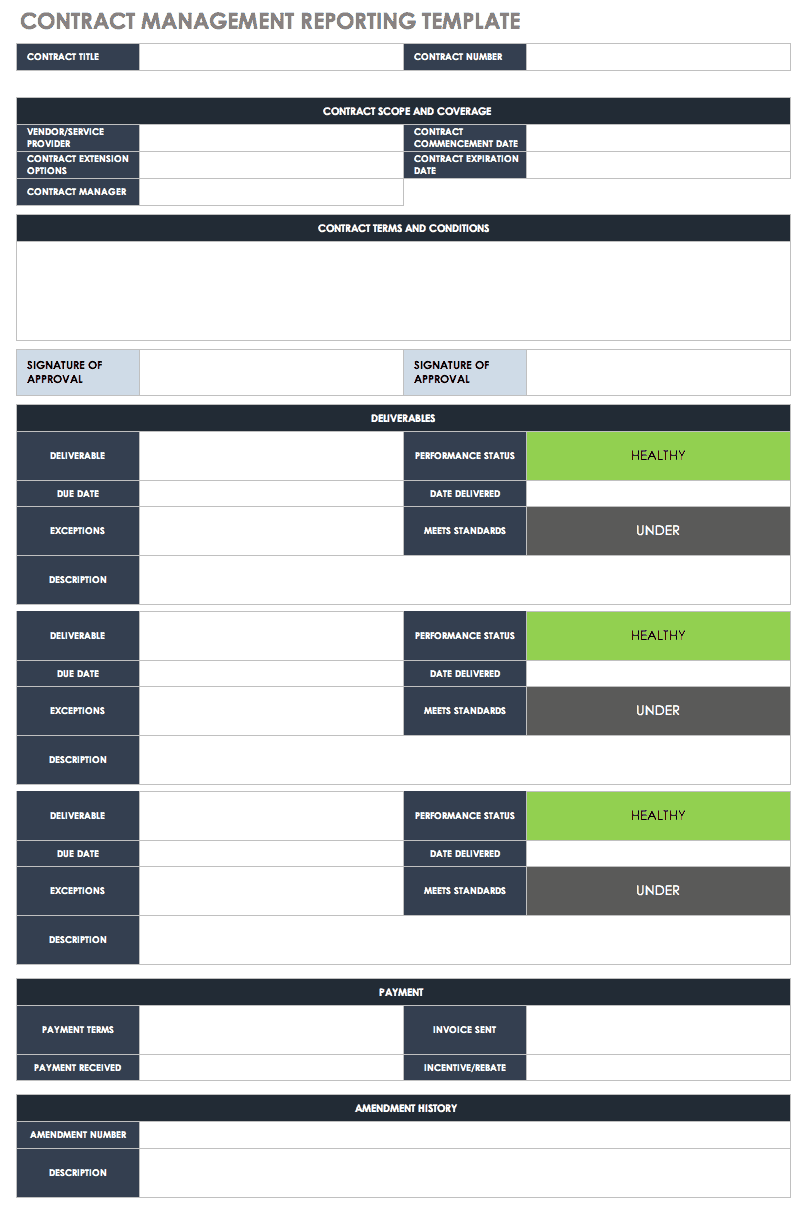
A contract management reporting template helps you organize and track each contract for your organisation. With this template, you tin can create a separate document for each contract you manage, complete with a projection description, key dates, and deliverables, plus the information y'all need to ensure the contract stays on track or to create alerts if your project is falling behind.
Download Contract Direction ReportingTemplate - Excel
Elevate Project Management to Ensure You lot Meet Deliverables
Contract management can rely on project management principles to enhance a robust and consummate system one time you take a full understanding of every step in the contract procedure. Consider how y'all tin can accomplish these tasks:
- Manage Service Commitment: Vendors should deliver goods and services in the quality and quantity that you've stipulated in the contract and on the schedule to which all parties have agreed.
- Manage Relationships: Communication between your system and the vendor or service provider should exist frequent, fair, and transparent to avert misunderstandings and keep the door open up for hereafter contracts.
- Manage the Contract: Day-to-day contract administration and oversight ensures that all parties are meeting the terms and atmospheric condition, equally well every bit identify and mitigate potential fiscal and regulatory risks.
- Conduct Assessments: Reports and audits can help you lot place gaps between the written contract and the actual implementation, also as ensure that y'all follow your organization's contracting procedure.
- Protect the Contract's Value: Look for problems that could touch on your revenue or margin, including unrecorded liabilities, underreported acquirement, or overpayments. Make sure the value of the contract to your business doesn't deteriorate during the contract life cycle.
- Manage Change: Most contracts require adjustments or amendments during the deployment of deliverables. Your organization needs to effectively certificate, communicate, and handle all changes.
- Seek Improvements: Once you complete the contract, evaluate what worked, how you tin improve your contracting process, and how you lot tin can enhance your human relationship with the vendor or service provider.
Establish Metrics to Measure Your Effectiveness
Data drives decisions concerning your success in contract direction and functioning. You tin't know how well your procedure works without having clear goals and establishing primal performance indicators (KPIs). While every contract may be dissimilar, you can use sure metrics with your vendors to evaluate contract management.
- Contract Life Bike Length: Mensurate the number of contracts in each life cycle stage (pre-laurels, award, and mail service-award) and the elapsing of contracts in each stage. Look for bottlenecks in your process, and identify vendors that may create delays. Determine an acceptable range for a detail internal department or external vendor, besides as for specific products or deliverables.
- Contract Value: Measure your overall contract value (average revenue per contract) on a monthly, quarterly, and yearly basis. You lot tin compare the annual value of recurring contracts with that of new contracts, equally well as with the lost acquirement from contracts that you terminate or don't renew.
- Contract Trends: Measure out the number of contracts by type, partner, customer, program, or geographic region. Look for growth opportunities or established business that yous can build upon.
- Contract Compliance: Measure how well you and your vendors run into the terms and conditions of your contracts. Missing milestones can be costly in relation to acquirement or other regulatory guidelines, while missed payments or overpayments can cost you coin. Too, look at the number of changes needed for your contracts and identify any amendments that are issued on a regular basis. You may identify needs in your contract templates or pinpoint bug with specific external vendors or internal departments.
- Quality: In manufacturing, quality is like shooting fish in a barrel to measure. A production meets the specifications or acceptable number of defects per number of parts. In service contracts, you tin can mensurate quality past the number and type of customer complaints and by response times. Await for any exceptions that you lot make on a consequent basis, and note whether you are exposed to additional take a chance.
- Cost Effectiveness: This starts with the contract'south cost terms but extends to the length of the contract cycle, operation metrics, and the quality of the appurtenances or services.
- Contract Execution: Measure how finer and accurately y'all gather signatures, and make sure they are the right signatures. Contracts without the appropriate say-so tin can carry unforeseen consequences, especially if the products or services are highly regulated or expose you to increased costs, added take a chance, or even lawsuits.
- Renewal Rates: The percentage of contracts that you don't renew tin assistance you lot place revenue loss from existing clients. That means your sales department has to work harder to gain new clients, and it can increase your customer acquisition costs. Determine the adequate range of renewal rates for your organization.
Key Performance Indicator Dashboard
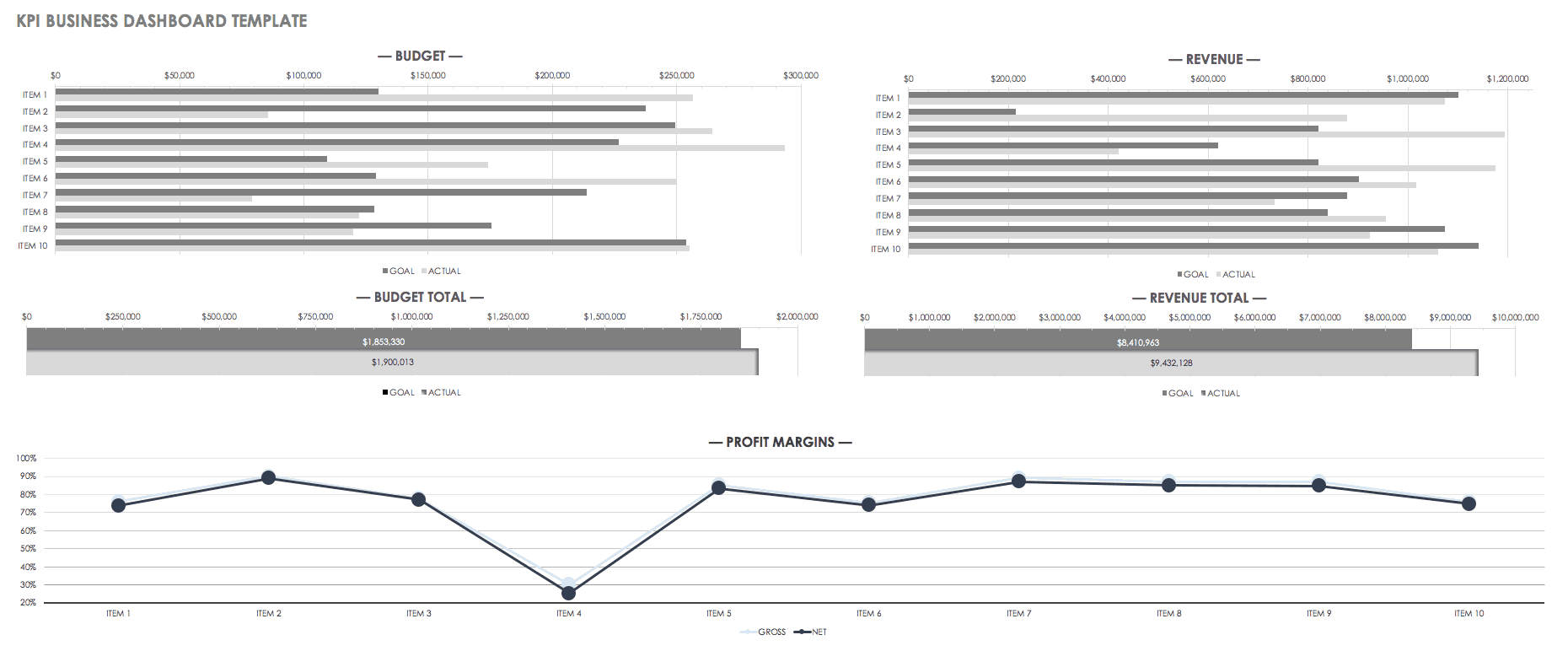
A KPI dashboard can help you runway everything from your total number of contracts to trends per contract or partner/vendor. Once you lot know what y'all desire to monitor, choose the dashboard that volition provide the correct data presentation to guide your business. Use this template to create custom KPI dashboards for your business organization.
Download Fundamental Performance Indicator Dashboard - Excel
Optimize Contract Value
Mature contract direction establishes a steady feedback loop between your contract portfolio and your business performance. Your goal is to maximize financial and operational performance.
Examine your electric current processes (the group of activities or tasks you need to manage a contract) and your workflows (how the tasks are organized and who completes them). Identify and eliminate tasks, steps, and obstacles that waste your organisation's fourth dimension, money, and resources. Analyze your contracts for benefits to your organization, whether they are of financial or strategic value. Using your KPIs, you tin likewise identify vendor performance.
Continually Communicate
Contracts touch many departments in your organization. Ensure that teams don't work in silos, and collaborate smoothly and transparently. A shared system or document library provides real-fourth dimension admission to information, and it streamlines communication and determination making. Contract management is easier when all stakeholders tin quickly brand decisions.
Integrate Legal Considerations
If your legal department or general counsel is considered the "department of no," you've already identified one roadblock to successful contract management. Showtime the contract management procedure with up-to-date templates that account for all the legal aspects. Use these templates to create consistent contracts that help you lot avoid financial and compliance risks. Past doing so, you lot free up legal counsel to focus on the critical, unique aspects of a contract, rather than the standard boilerplate that's required to execute and monitor the contract terms and conditions.
Document the role of counsel in your contract management. In some organizations, lawyers work behind the scenes to draft, finalize, and monitor contracts. In others, lawyers are agile negotiators. Use their expertise to establish legal playbooks that you tin can use during negotiations.
The Benefits of Software and Automating the Contract Life Cycle
Aberdeen Grouping, an international market intelligence visitor, found that organizations with contract management solutions perform at a higher level than their peers. The best-in-class companies have more than 75 percent of their contracts in a searchable repository, enabling them to gain greater insight into contract performance, mitigate gamble, and amend their contract renewal rates.
With transmission contract management, y'all run the risk of bottlenecks in the sales or approving bicycle that could event in missed renewal opportunities and lost concern revenue. Manual contract management exposes you to transmission errors and inefficient filing systems that bog down your organization.
That'due south why many organizations accept, trust, and rely on cloud-based applications and software. These systems tin can feature central document repositories that function like a digital version of a filing cabinet. Hither are a listing of features:
- Organized and searchable contracts that give you lot greater visibility into the data and details of your contract portfolio
- Self-service portals
- Electronic signatures (e-signatures) and approvals
- Pre-canonical contract templates, which are especially useful for larger contracts that crave coordination among multiple departments and parties
- Standard legal playbooks
- In-depth tracking and reporting tools
- Software storage that securely protects contracts and processes
The more robust systems bridge the gap between your company'southward customer relationship management (CRM) and enterprise resource planning (ERP) systems. Automatic systems allow yous to accomplish a range of tasks, including the following:
- Streamline contract management processes, giving management, stakeholders, and general counsel greater confidence.
- Create contracts quickly and accurately, shortening your sales cycle, improving contract flexibility, and decreasing contract disputes.
- Increase revenue by collecting payment sooner and improving contract renewal rates.
- Track compliance quickly and improve legal, vendor, and supplier compliance.
- Cut your administrative costs and free up staff time.
- Decrease acquirement leakage.
- Mitigate risk apace.
- Grow sales due to more than time for pb generation and managing customer relationships.
- Amend your KPI analysis and spend optimization, identifying business opportunities and cut costs.
Steps to Automate the Contract Management Process
You can have steps to move to an automatic process, which combines your collection of paper and digital files to create an online repository that helps you grow your business and optimize your contract administration process.
Put your files in one location with these steps:
- Conduct an audit of contract locations. Identify where your files are currently located and who manages, stores, and accesses them.
- Identify the digital systems used to shop and monitor contracts.
- Gather supporting contract management tools, such equally contract templates and checklists.
- Make up one's mind how y'all want to structure a single system that creates a key repository of contracts, templates, amendments, and vendor information. Include key terms that you will use to search the information.
Improve your contract workflow with these steps:
- Identify which departments or areas demand to review contracts.
- Map the order for contract approving.
- Determine how you will add contract language and version control.
- Build a library of legal playbook talking points and tools.
- Evaluate which processes can be automated to free up manual stakeholder and legal reviews.
Constitute your contract execution process for all stakeholders with these steps:
- Gain process efficiencies with alerts and notifications.
- Implement an east-signature process.
- Determine how you will distribute concluding contracts to all parties.
Monitor contract functioning with these steps:
- Build and employ role-based dashboards for real-time performance data.
- Use compliance tracking to identify and mitigate pain points.
- Create alerts that monitor milestones, invoicing, and renewal deadlines.
The Future of Contract Management
In an increasingly global economy, the companies that survive and thrive will exist those that know how to get together and leverage data to drive new acquirement. The best in breed are already reimagining how they manage the customer life bike; they are beginning to see contract management equally a discipline that extracts contract information to guide their sales and revenue and impact the bottom line. Contract managers will work closely with sales, as an integrated unit, to oversee contracts in all the arrangement'south trading relationships.
Contract management will shift from managing compliance to improving governance. It will be the "framework within which the integrity of a transaction is decided," every bit divers by Nobel laureate Oliver Williamson. There are four components to an evolving collaborative governance framework for contract management:
- Relationship Management: Gone are the days of merely managing approvals and monitoring compliance. Contract management is about the relationship between the key departments in your arrangement and your vendors and service providers.
- Joint Performance and Transformation Management: This process tracks partnerships and strategically envisions how these relationships can help you re-imagine your business.
- Exit Management: Apply governance to control your organization'south take a chance and revenue. Information technology encourages ethical, positive, and proactive approaches.
- Compliance with Evolving Regulations and Special Concerns: Once contract management matures in your organization, the process tin can broaden its view. Managers will exist forward-thinking, looking at the futurity of an increasingly complex regulatory environment and the unique needs of existing partners, as well as the demands of potential customers.
Improve Contract Management with Real-Time Work Management in Smartsheet
Empower your people to become above and beyond with a flexible platform designed to lucifer the needs of your squad — and adapt equally those needs change.
The Smartsheet platform makes information technology piece of cake to plan, capture, manage, and study on work from anywhere, helping your team be more effective and get more done. Report on fundamental metrics and become real-fourth dimension visibility into piece of work as information technology happens with curlicue-upward reports, dashboards, and automated workflows built to go along your team continued and informed.
When teams take clarity into the work getting washed, there's no telling how much more they can achieve in the aforementioned amount of time. Attempt Smartsheet for free, today.
cadoretteupoichis.blogspot.com
Source: https://www.smartsheet.com/content/contract-management-guide-templates
0 Response to "What type of contract language could these companies rely upon to terminate the contracts?"
Post a Comment